Blog

Best Trucks for Small Businesses That Work

Best Trucks for Small Businesses That Work

A truck that looks right in the parking lot can still be wrong for the job. A landscaper hauling mowers has different needs than a contractor pulling an equipment trailer, and a delivery business may care more about fuel use and city maneuverability than maximum towing. The best trucks for small businesses are the ones that earn their keep every day without stretching the budget, slowing the crew down, or creating headaches at service time.

For South Puget Sound businesses, that decision also has a regional angle. Tight job sites around Tacoma, wet weather in Puyallup, highway runs toward Seattle, and occasional trips over the pass all affect what makes sense. Start with the work your truck will do most often, then choose enough capability for the demanding days without paying for capacity that sits unused.

What a Business Truck Needs to Do

Before comparing badges, put real numbers around your work. Payload is the weight carried in the truck itself: people, tools, materials, a ladder rack, bed accessories, and cargo all count. Towing is what the truck can pull behind it. These numbers are related, but they are not interchangeable.

A truck can have impressive towing capacity and still run short on payload once a crew, toolbox, and loaded bed are involved. That matters for electricians, plumbers, remodelers, and mobile service businesses that carry a lot before a trailer ever gets attached. Check the specific truck's door-jamb payload label, since cab configuration, engine, drivetrain, and equipment can change the rating.

Operating cost deserves the same attention. Consider fuel, insurance, tires, maintenance, upfitting, and downtime, not just the purchase payment. A less expensive truck that requires two trips every day can cost more than a properly sized pickup over time. On the other hand, a heavy-duty truck is not automatically the smart buy if it spends most of its life carrying a few hand tools.

Best Trucks for Small Businesses by Job Type

Ford Maverick: Right-Sized for Light-Duty Work

The Ford Maverick makes a strong case for businesses that need a useful pickup without full-size ownership costs. Its compact footprint is easier to park at supply houses, apartment projects, and crowded customer locations. The bed handles smaller loads well, while available towing capability can cover light trailers, utility equipment, or occasional weekend use.

It is a practical match for inspectors, real estate teams, small delivery routes, mobile detailers, and sole proprietors who do not need to haul pallets or tow heavy machinery. The trade-off is straightforward: the Maverick is not built to replace an F-150 for large material loads or frequent trailer duty. Treat it as a smart business tool, not a scaled-down workhorse for work it was never meant to handle.

Ford Ranger: A Capable Middle Ground

The Ford Ranger fits businesses that have outgrown a compact truck but do not need the size of a full-size pickup. It offers more towing confidence and a more traditional truck feel while remaining manageable on narrow streets and job sites. For contractors with enclosed trailers, outdoor service companies, and businesses that split time between work and recreation, that balance can be appealing.

Four-wheel drive may be worth the investment for crews who regularly reach muddy sites, forest roads, or winter conditions. For mostly paved routes, two-wheel drive can be a sensible way to control upfront cost. The right answer depends on where the truck works, not just what looks tougher on the lot.

Ford F-150: The All-Around Business Standard

For many small businesses, the Ford F-150 is the sweet spot. It can be configured for very different jobs, from a straightforward regular-cab work truck to a crew-cab pickup that carries a full crew comfortably. With multiple engine options, bed lengths, towing packages, and available four-wheel drive, an F-150 can be tailored more precisely than a one-size-fits-all truck.

This is often the right choice for general contractors, landscapers, HVAC companies, construction crews, and businesses that tow regularly while still using the truck as a daily driver. A crew cab helps when employees or family ride along. A longer bed can matter more when the truck carries lumber, pipe, or larger equipment every week.

Pay attention to how the truck will be equipped. A tonneau cover protects tools, a spray-in bedliner helps with daily wear, and a properly selected trailer brake controller can make towing safer and easier. Those choices may sound secondary, but they have a direct effect on how well the truck supports the business.

Ford F-150 Lightning: A Smart Fit for Some Fleets

Ford no longer takes orders for the current all-electric F-150 Lightning, but a pre-owned Lightning can still make sense for businesses with predictable local routes and reliable charging access. It offers a quiet drive, quick response in traffic, and available onboard power that can be useful at certain job sites. For a company running local deliveries or service calls, the ability to leave the gas station out of the weekly routine may be a real advantage.

Still, electric ownership asks a few practical questions. Towing reduces driving range, public charging can add time to a long workday, and home or business charging access is a major part of the equation. The Lightning is best evaluated around an actual route and workload, not a brochure estimate. For the right business, it can be a productive tool. For a crew towing heavy trailers across the region every day, a gas or diesel truck may remain the better fit.

Ford Super Duty: Built for the Heavy Work

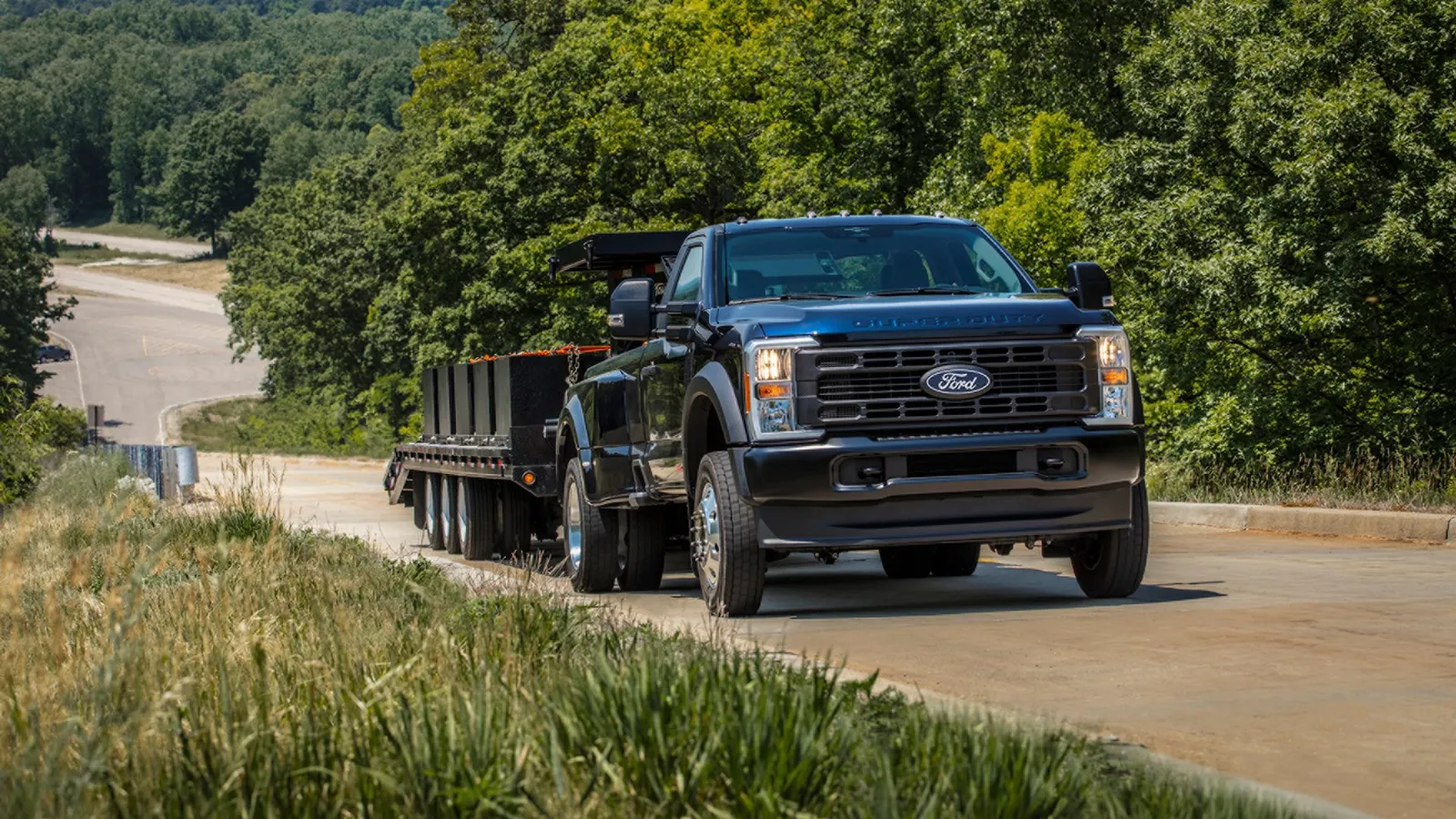
When the work involves substantial trailers, skid steers, large equipment, or consistently heavy payloads, Ford Super Duty trucks step up. The F-250 and F-350 are designed for jobs that push beyond half-ton capability, with configurations suited to serious towing and commercial use.

The benefits are clear for excavation, larger landscaping operations, agricultural work, equipment transport, and trade businesses with demanding trailers. The compromises are real, too: bigger trucks cost more to buy and operate, take more room to park, and can be more truck than a light-duty business needs. Buy a Super Duty because the job requires it regularly, not because heavier always sounds better.

Choose the Cab, Bed, and Powertrain Carefully

A good business truck is more than a model name. The cab determines how many people and how much gear can travel inside. A regular cab maximizes bed length for the overall truck size. A SuperCrew or crew cab gives passengers more room and can double as secure storage, but it may limit bed length depending on the configuration.

Bed length affects daily efficiency. If long materials are common, measure what you carry before deciding. If the truck will spend more time in city traffic than at a lumberyard, a shorter bed may be easier to live with. Bed extenders, racks, and trailer solutions can help, but they do not fully replace choosing the right foundation.

Powertrain selection comes down to workload. Gas engines are familiar and versatile for many businesses. Hybrid and electric options can reduce fuel use for the right local-duty cycle. Diesel power can be valuable for frequent heavy towing, though its added cost and maintenance needs should be justified by the work. There is no prize for choosing the biggest engine if it does not improve the business's day-to-day operation.

Do Not Overlook Service and Downtime

A work truck is a revenue tool. When it is parked unexpectedly, the impact can reach beyond a repair bill: missed appointments, delayed jobs, frustrated customers, and an idle crew. That is why regular oil changes, tire inspections, brake service, and trailer checks deserve a place on the business calendar.

If you are buying used, inspect the truck with the same discipline you bring to a job estimate. Look at maintenance history, tire condition, hitch wear, bed damage, suspension components, and signs that the truck has been consistently overloaded. A used truck can be an excellent value, but condition matters more than a low number on the window sticker.

Make the Truck Work Before You Buy It

Bring the real questions to the test drive. Can your crew get in and out easily? Does the bed length suit your most common materials? Will the truck fit in your parking area? If towing is central to the business, talk through trailer weight, tongue weight, brake requirements, and the equipment you already use.

At Korum Ford in Puyallup, our team can help match the truck to the job instead of pushing a bigger payment. Whether you need a nimble Maverick, a ready-for-work F-150, or a Super Duty that can handle serious equipment, the goal is simple: put your business in a truck that is ready to show up, carry its share, and keep moving when work calls.

Frequently Asked Questions

Can I finance a work truck under my business name at Korum Ford?

Yes. Korum Ford offers a Ford commercial credit application for business buyers in addition to its standard finance application. Lenders may review time in business, revenue and how the truck will be used, and newer businesses can be asked for extra documentation. Bring your business details and a clear description of the work the truck will do so the team can compare options.

Does a small business truck in Pierce County need four-wheel drive?

Not always. Two-wheel drive can be a sensible way to control cost for crews that stay on paved routes around Puyallup, Tacoma and Auburn. Four-wheel drive earns its keep on muddy job sites, gravel access roads and winter trips over the Cascades, where WSDOT can post traction tire and chain requirements. Match the drivetrain to where the truck actually works.

Is the F-150 hybrid a good fit for a service business?

It can be. The PowerBoost full hybrid suits routes with lots of stop and go driving, and its available Pro Power Onboard system can run tools or chargers at a job site without a separate generator. It still offers full-size towing and payload. Drive one with your typical load and ask how the hybrid fits your daily route before you decide.

How do I find the real payload of a specific work truck?

Look for the tire and loading information label on the driver door jamb, which lists the payload for that exact truck as built. Cab style, engine, drivetrain and options all change the number. Add up your crew, tools, materials, upfit equipment and trailer tongue weight, then compare the total with the label before you buy.
Recommended Posts

F-150 Versus Silverado Comparison for Truck Buyers

F-150 Versus Silverado Comparison for Truck Buyers

A truck has to earn its spot in a South Puget Sound driveway. Maybe it is hauling materials through Puyallup, pulling a camper toward the Cascades, getting wet gear home from the coast, or handling a packed family weekend. This F-150 versus Silverado comparison focuses on what matters when the truck will be used, not just admired from a parking lot. Both the Ford F-150 and Chevrolet Silverado 1500 are proven full-size pickups with major capability, broad trim lineups, and loyal owners. The better choice depends on the work you do, the trailer you pull, the roads you travel, and how you want the truck to feel every day. F-150 Versus Silverado Comparison: The Big Difference The Ford F-150 is built around choice. Its engine lineup ranges from efficient turbocharged options to a V8 and the PowerBoost hybrid. That variety lets shoppers match the truck to a specific job instead of paying for power they will not use. The F-150 also uses an aluminum-alloy body, a design Ford has refined for years to reduce body weight while maintaining the strength truck owners expect. The Silverado takes a more traditional route, with a steel body and a strong emphasis on familiar truck power. Its lineup has included turbocharged four-cylinder, V8 gas, and Duramax diesel options, depending on model year and trim. For buyers who want a straightforward V8 pickup or are drawn to diesel torque and efficiency, the Silverado makes a compelling case. Neither approach is automatically better. An F-150 buyer may value flexibility and available technology, while a Silverado buyer may prefer the feel and sound of a conventional V8 or the long-haul character of a diesel. Start with the jobs on your calendar, not the badge on the grille. Engines, Power, and Everyday Driving Ford gives F-150 shoppers an unusually wide range of powertrains. The 2.7L EcoBoost, the starting engine in the current lineup, is a smart fit for drivers who want responsive power without moving up to the largest engine. The 3.5L EcoBoost is a popular choice for serious towing and hauling, while the available 5.0L V8 appeals to drivers who want naturally aspirated V8 power. The PowerBoost hybrid brings useful low-end torque and can provide available onboard power at a jobsite or campsite. That available Pro Power Onboard system is a real-world advantage for some owners. It can run tools, charge equipment, or support a tailgate setup without hauling a separate generator. It will not matter to every buyer, but for contractors, campers, and tailgaters, it can turn the truck into part of the plan. The Silverado counters with its own broad power choices. Its turbocharged four-cylinder is aimed at efficient daily use, while the available V8 engines serve buyers who want traditional full-size-truck performance. The Duramax diesel deserves a close look for frequent trailer towing and long highway miles. Diesel ownership also brings different maintenance considerations, fuel availability, and higher up-front costs, so it is best for drivers who will actually use its strengths. Around Tacoma traffic, wet roads, and mountain grades, both trucks have the power to feel confident. Test-drive the engine you are considering, especially if you are moving from an older truck. Turbocharged torque and modern transmissions can make a smaller-displacement engine feel far stronger than expected. Towing and Payload: Match the Truck to the Trailer Maximum tow ratings get attention, but the right number is the one that fits your actual setup. Proper towing depends on the cab, bed length, engine, axle ratio, drivetrain, payload package, hitch equipment, and trailer configuration. A truck advertised with a maximum rating may not match the vehicle sitting on the lot. Properly equipped F-150 models can offer exceptional towing and payload capability. Ford also provides available features designed to reduce the guesswork, including trailer backup assistance, integrated trailer brake controls, and camera views that can make hitching and maneuvering less stressful. For a boat at Lake Tapps, a utility trailer for work, or a travel trailer headed east, those details can matter as much as peak horsepower. The Silverado is also a capable tow rig, with available trailering technology, camera systems, and configurations built for heavy work. Its diesel option can be particularly attractive for owners who tow regularly over longer distances. Still, check the payload sticker on the exact truck. Tongue weight, passengers, gear, and accessories all count against payload, and this is where many buyers discover that a big tow rating tells only part of the story. If you tow occasionally, a well-equipped half-ton can be a comfortable, versatile answer. If you tow a heavy fifth-wheel every weekend or carry commercial loads day after day, it may be worth discussing whether a Super Duty-class truck is a better long-term fit. Cab Comfort, Storage, and Workday Usability The F-150 and Silverado both offer regular, extended, and crew-cab-style configurations depending on availability, and both can serve as family transportation. Crew-cab models provide useful rear-seat space for adults, child seats, work crews, and the inevitable pile of bags that comes with a weekend away. The F-150 stands out with thoughtful work-focused features. Available interior work surfaces can create a usable place for a laptop between appointments. Storage solutions, fold-flat seating options, and available tailgate features make the cabin and bed easier to use without turning the truck into a rolling office you never asked for. The Silverado offers a comfortable cabin in the right trim and has a strong practical feature of its own: the available Multi-Flex tailgate. Its multiple configurations can help when loading long items, creating a step, or keeping smaller cargo from sliding out. It is a useful system for homeowners and jobsite users alike. On either truck, trim level changes the experience dramatically. A work-focused model and a luxury-oriented trim may share a nameplate but feel like entirely different vehicles. Sit in the rear seat, open the storage compartments, and load something you would normally carry. That hands-on check reveals more than a spec sheet. Technology and Safety for Northwest Roads Modern full-size trucks can be remarkably easy to live with, especially when equipped with blind-spot monitoring, rear cross-traffic alert, adaptive cruise control, and parking cameras. These features are not substitutes for attentive driving, but they can reduce stress in crowded parking lots, on rainy commutes, and when towing. Ford's available BlueCruise hands-free highway driving technology is a notable differentiator for eligible F-150 models and compatible roads. It is designed to assist with controlled-access highway travel, not replace the driver. For people with frequent freeway commutes between Kent, Federal Way, Seattle, and Puyallup, that added convenience may be worth considering. Silverado buyers should also compare the available driver-assistance packages carefully. Chevrolet offers useful trailering camera technology and advanced safety features, but availability can vary by trim and package. Before deciding, make a short must-have list. If a 360-degree camera, heated steering wheel, trailer monitoring, or adaptive cruise control matters to you, confirm it on the specific truck rather than assuming it is standard. Off-Road Capability and Bad-Weather Confidence For forest roads, snow trips, and rougher worksites, both brands offer dedicated off-road trims. Ford's F-150 Tremor and Raptor bring distinct personalities. Tremor is aimed at buyers who want serious off-pavement ability while retaining everyday truck usefulness. Raptor is the high-performance choice, built for drivers who want advanced suspension and a much more aggressive off-road experience. Silverado Trail Boss and ZR2 models provide Chevrolet alternatives with lifted stances, off-road hardware, and tougher styling. The ZR2 is especially worth comparing with higher-end off-road F-150 models if trail performance is central to your purchase. For most Washington drivers, four-wheel drive, capable tires, good ground clearance, and sensible driving habits will do more than an extreme off-road package. A less specialized trim may leave more room in the budget for the accessories or trailer equipment you will use every week. Which Truck Is the Better Buy? Choose the F-150 if you want the widest engine selection, available hybrid power, strong towing and payload potential, and practical features that support work and recreation. It is especially appealing for shoppers who want their truck configured around a specific task, whether that means commuting efficiently, powering tools, towing a trailer, or taking the family out of town. Choose the Silverado if a traditional V8 experience, available diesel power, or the Multi-Flex tailgate is high on your list. It remains a capable, comfortable full-size truck with plenty to offer drivers who know exactly what powertrain and setup they prefer. The best move is to bring your real questions to the lot: What does your trailer weigh when loaded? How many people ride with you? Do you need a short bed for parking or a longer bed for materials? At Korum Ford, a truck-focused team can help you compare F-150 cab, bed, engine, and package options without turning the decision into a high-pressure sales pitch. A pickup should make the next job, trip, or rainy Monday easier. Take the time to sit in the truck, check its payload label, and drive the configuration that matches your life. The right answer is the one that is ready when you put it to work. Frequently Asked Questions Which half-ton truck is better for towing a camper over Washington passes? Either can do it when properly equipped, so the trailer decides. Check the exact truck's door jamb payload and tow rating, then add tongue weight, passengers and gear. On Snoqualmie or White Pass, engine braking, trailer brakes and cooling matter on long grades. Check WSDOT pass reports before you leave and carry chains in winter. Does the F-150 PowerBoost hybrid need different maintenance? Routine care looks much like any F-150: oil changes guided by the oil life monitor, tire rotations, brake and fluid checks. The hybrid system has its own battery and cooling components that technicians inspect during scheduled service. Follow the maintenance schedule in your owner's manual and the Ford app, and have the truck serviced by technicians trained on Ford hybrids. Is BlueCruise available on every F-150? No. BlueCruise hands-free highway driving is available on select F-150 trims and works only on prequalified divided highways. The driver must keep eyes on the road and be ready to take over at any time. Ask Korum Ford which trucks in stock are equipped and how the feature works on Interstate 5 commutes through Pierce and King counties. Can I compare several F-150 configurations in one visit to Korum Ford? Usually, yes. Korum Ford typically stocks a range of F-150 cabs, beds, engines and trims, so you can often sit in a SuperCrew and a SuperCab, compare bed lengths and drive different engines in one trip to Puyallup. Bring your trailer weight and the gear you haul, and the team can narrow the choices to the trucks that fit.

Trade Valuation and What Your Vehicle Is Worth

Trade Valuation and What Your Vehicle Is Worth

A clean F-150 with service records, good tires, and the right tow equipment can earn a very different offer than a similar truck with warning lights or hard-use damage. That is why a trade valuation is more than a quick glance at the odometer. It is a real-world estimate of what a dealership can offer for your current vehicle based on its condition, equipment, demand, and local market. For drivers around Puyallup, Tacoma, Federal Way, Kent, Seattle, and Sumner, trading in can be a smart way to move into a newer truck or SUV without the extra work of selling privately. The key is knowing what goes into the number before you arrive, so you can make a confident decision without guesswork. What a Trade Valuation Really Measures A trade valuation estimates what a dealer can pay for your vehicle as part of another purchase or lease transaction. It is not the same as the asking price you might see on a used-car listing. A retail price includes the dealer's inspection, reconditioning, marketing, overhead, and warranty considerations. A trade offer reflects what the dealer expects the vehicle to be worth after those costs and after accounting for the risk of reselling it. That gap can feel frustrating if you compare your offer with online listings, but it is not automatically a bad deal. Selling your vehicle yourself may bring in more money, especially if it is clean, popular, and priced well. It also means handling photos, messages, test drives, payment safety, paperwork, and a buyer who may disappear after saying they are "definitely coming tonight." A trade puts those jobs on the dealership. It can also simplify the timing when you need your next vehicle for work, school drop-offs, towing, or a weekend out near the mountains. Your Vehicle's Condition Matters, but So Does Its Story Mileage, age, accident history, and overall condition are major parts of any appraisal. So are the details that do not always show up in an online estimate. A properly maintained truck with documented oil changes, brake work, and scheduled service tells a stronger story than one with the same mileage and no records. Be honest about condition from the start. Minor paint chips, worn floor mats, and a scratched bed are common on working trucks. Significant collision damage, mechanical issues, water damage, or a dashboard full of warning lights can change an offer more sharply. Being upfront does not hurt your position. It keeps the appraisal accurate and prevents surprises later. What Can Raise or Lower a Trade Valuation The market matters as much as the vehicle itself. A four-wheel-drive pickup may be especially appealing when drivers are preparing for wet weather, jobsite season, or winter trips over the pass. A three-row SUV in good shape can draw interest from growing families. Demand shifts, so the same vehicle may not carry the same value every month. Equipment can make a difference, particularly on trucks and rugged SUVs. Features such as four-wheel drive, a factory tow package, bed liner, upgraded payload or towing equipment, leather seating, safety technology, and well-kept off-road gear may help the vehicle stand out. Factory equipment usually carries more predictable value than heavily customized parts, though quality upgrades can still appeal to the right buyer. Tires deserve attention, too. A set with plenty of even tread signals that a vehicle is ready for the road. Four mismatched, worn, or damaged tires signal an upcoming expense. The same goes for brakes, windshield cracks, battery health, and overdue maintenance. Location also plays a role. South Puget Sound drivers often need vehicles that can handle rain, hauling, family travel, and recreation. Clean, capable trucks and SUVs may have stronger local appeal than vehicles with configurations that do not fit how people drive here. A dealer's current inventory and buyer demand can affect an offer as well. If a lot already has several nearly identical vehicles, the appraisal may be more conservative. How to Prepare for a Better Trade Valuation You do not need to spend a fortune detailing a vehicle or repairing every cosmetic flaw before an appraisal. In some cases, expensive repairs will not return their full cost in trade value. Focus instead on the easy steps that help an appraiser see the vehicle clearly. Start by removing personal items from the cabin, cargo area, center console, and truck bed. Give the vehicle a basic wash and vacuum. This is not about hiding wear. It simply makes it easier to inspect the paint, interior, and features without clutter getting in the way. Bring both keys or fobs, if you have them, along with service records, title information if the vehicle is paid off, and your current registration. If there is a loan, bring your lender details and the approximate payoff amount. The dealer can help verify the exact payoff, but knowing where you stand before you shop is always useful. Do not clear warning lights right before an appraisal without fixing the underlying problem. A light that returns during the inspection creates more questions than a straightforward explanation. If you have recently completed a repair, keep the receipt. Proof of a new battery, brakes, tires, or scheduled maintenance can help document the vehicle's care. Know Your Payoff and Equity Position Your vehicle's trade value and your loan payoff are two separate numbers. If your trade is worth more than the remaining payoff, you have positive equity. That amount can be applied toward your down payment, purchase, or lease. If you owe more than the vehicle is worth, you have negative equity. You may still be able to trade, but the difference needs to be paid or included in the next loan. Rolling a large balance into a new vehicle can raise your payment and extend what you owe, so it deserves a clear conversation rather than a rushed decision. Ask for a breakdown that shows the trade offer, payoff, vehicle price, taxes, fees, down payment, and financing terms separately. A good deal should make sense line by line, not just as one monthly payment. Trading In Versus Selling Privately Private sale often has the higher upside, especially for a newer, low-mileage vehicle in excellent condition. It may be worth considering if you have time, are comfortable managing the process, and do not need to coordinate your sale with your replacement vehicle. Trading in is usually the practical choice for people who value speed and simplicity. You can arrive in your current vehicle and leave in the next one without arranging temporary transportation. Depending on the transaction, a trade allowance may also reduce the taxable amount of your replacement vehicle in Washington. Your dealership can explain how that applies to your paperwork. There is no one right answer. A work truck owner who needs a dependable replacement before Monday may value a quick trade far more than a few extra weeks of private-sale effort. A weekend vehicle owner with plenty of time may make a different call. Get an Appraisal You Can Use Online value tools are a helpful starting point, but they cannot fully judge smells, tire wear, paint condition, maintenance records, aftermarket equipment, or how a vehicle drives. A hands-on appraisal can. Expect the process to include a walk-around, VIN and history review, mileage check, feature verification, and often a short drive or mechanical evaluation. At Korum Ford in Puyallup, bring in your truck, SUV, or car for a straightforward appraisal while you look at options that fit your next chapter, whether that means an F-150 for the job, a Bronco for trail weekends, or an Explorer for family duty. Ask questions, compare the numbers, and take the time you need to feel good about the decision. A vehicle has done real work for you, from rainy commutes to loaded weekends and everything in between. Give its trade valuation the same practical attention you would give your next set of tires: get the facts, understand the condition, and choose the option that keeps you moving forward. Frequently Asked Questions Can I trade in a vehicle that is not a Ford? Yes. A trade-in does not have to match the brand you are buying, and the same factors apply: condition, mileage, equipment, history and local demand. A clean pickup or SUV from another brand can still bring a solid offer. Bring the keys, records and payoff details so the appraisal reflects the full picture of your vehicle. How long is a trade-in appraisal good for? It varies. Used vehicle values move with the market, so an appraisal is usually tied to a short window and to the vehicle's condition and mileage staying the same. Ask how long the figure will be honored when you receive it. If you plan to wait several weeks before buying, expect the number to be reviewed again. What if two people are listed on my vehicle title? When a title lists more than one owner, the dealership will usually need each owner to sign the transfer paperwork, and both may need to be present or provide signed documents. Check how the names are joined on the title. Call Korum Ford ahead of your visit to confirm what to bring so the trade is not delayed. Do seasons affect trade values in Pierce County? They can. Four-wheel-drive trucks and SUVs often draw more interest heading into the wet season and winter pass travel, while convertibles and sporty cars may see more demand in spring and summer. Seasonal swings are usually smaller than the effect of condition and mileage, so a well-kept vehicle with records matters most whenever you trade.

Leasing Versus Buying Vehicles Explained

Leasing Versus Buying Vehicles Explained

A new F-150 can be your weekday jobsite partner, your weekend boat hauler, and the truck you trust when the forecast turns ugly over Snoqualmie Pass. That is why leasing versus buying vehicles is not just a question about a monthly payment. It is a decision about how you work, drive, tow, and plan for the next few years. For some South Puget Sound drivers, a lease keeps the newest technology and warranty coverage within reach. For others, ownership makes far more sense because a truck is built to earn its keep for a decade or more. The better choice is the one that fits your real life, not the one with the lowest number on a window sticker. Start With How You Will Use the Vehicle Before comparing payments, get honest about your driving habits. A family using an Explorer for school runs, Costco trips, and a few road trips each year may be a strong lease candidate. A contractor running an F-250 between Puyallup, Tacoma, Kent, and job sites every day may need the freedom that comes with ownership. A lease is designed around a set term, usually two or three years, and a mileage allowance. Common allowances range from 10,000 to 15,000 miles per year. Go beyond that limit, and you may owe a per-mile charge when you turn the vehicle in. If you regularly commute to Seattle, travel for work, or make frequent mountain and coast trips, those miles can add up faster than expected. Buying has no mileage cap. It also gives you more freedom to outfit a vehicle for your needs. Bed storage, a work rack, off-road tires, a lift, towing accessories, and other modifications are easier decisions when the truck is yours. Lease vehicles generally need to be returned in good condition and close to their original configuration. Leasing Versus Buying Vehicles: The Payment Difference A lease payment typically costs less per month than financing the same new vehicle. That is because you are generally paying for the vehicle's expected depreciation during the lease term, plus financing charges and fees, rather than the full purchase price. That lower payment can make a higher trim level or newer features more attainable. Maybe that means extra driver-assist technology for a family SUV, a more capable towing package, or the comfort features that make long drives to Federal Way or Seattle easier. Leasing can be practical when you value a newer vehicle every few years and want predictable warranty coverage. With a purchase loan, monthly payments may be higher, especially if you choose a shorter term. But each payment builds equity. Once the loan is paid off, you own an asset that can be traded, sold, or driven payment-free. Vehicles depreciate, of course, so equity is never guaranteed. Still, ownership gives you a chance to benefit if the vehicle holds value well and you keep it for years. The key is not to compare monthly payments alone. Compare the total cash you expect to spend over the period you plan to drive the vehicle. A lower lease payment can be the right move, but it is not automatically the cheaper move over six, eight, or 10 years. Think About the Down Payment Carefully Putting cash down can lower a lease or loan payment, but the situations are not identical. On a purchase, a down payment creates immediate equity and reduces the amount financed. On a lease, a large upfront payment may reduce your monthly bill, but it does not build ownership. If the leased vehicle is totaled early in the term, that upfront money may not come back to you. Many shoppers prefer to keep a lease down payment modest and protect their cash for an emergency fund, insurance, accessories, or other priorities. Your credit profile, trade value, available incentives, and lender terms all affect the numbers, so a personalized quote matters more than a generic online payment calculator. Warranty Coverage and Maintenance Matter New Ford leases generally stay within the factory warranty period, which can reduce surprise repair concerns. That appeals to drivers who want a newer SUV or truck without wondering whether a major repair is around the corner. You are still responsible for routine maintenance, tires, damage, and taking reasonable care of the vehicle, but the ownership experience can feel more predictable. Buying a new vehicle offers the same early warranty coverage, then gives you the option to keep it after the warranty ends. This is where a well-maintained truck can really pay off. Follow the service schedule, address small concerns early, and use the right fluids and parts. A properly cared-for F-150 or Expedition can serve a family or business for a long time. Used vehicle shoppers should weigh this especially carefully. Buying used can offer excellent value because someone else has already absorbed much of the first years' depreciation. At the same time, maintenance history, vehicle condition, and future repair needs deserve close attention. The best used-vehicle decision is rarely based on price alone. Towing, Off-Road Use, and Work Trucks Truck drivers often have reasons to buy that go beyond the math. If you tow a trailer, carry equipment, head down forest roads, or depend on your truck for your business, you need flexibility. The right vehicle needs to work when you need it, without a constant mental tally of mileage or end-of-lease wear. Normal use is expected on a lease, but excessive wear can bring charges at turn-in. Scratches from tight job sites, interior wear from tools and gear, tire damage, or trail pinstriping can become part of the final inspection. If your Bronco will see regular off-road weekends or your Super Duty will spend its life around materials and equipment, ownership often delivers more peace of mind. That does not mean leasing is off the table for truck buyers. A lease can work well for a driver who needs a capable F-150 for light towing and occasional projects, stays within the mileage allowance, and likes replacing the truck every few years. The important part is matching the agreement to the actual job. What Happens at the End of a Lease? At lease-end, you generally have three paths: return the vehicle, purchase it for the amount stated in your agreement, or move into another vehicle. That flexibility is valuable when your needs change. A growing family may outgrow an Escape and move to an Explorer or Expedition. A business may need more towing capacity than it did three years ago. Buying your leased vehicle can make sense if you love how it has been maintained, it has low mileage, and the purchase price compares favorably with similar vehicles on the market. Returning it may make sense if you want something different or if the vehicle no longer fits your routine. Review the condition and mileage well before the turn-in date so there are no surprises. Choose the Option That Lets You Drive Confidently Lease if you prefer newer vehicles, drive predictable miles, want a lower payment, and expect your needs to change within a few years. Buy if you rack up miles, plan to keep the vehicle long term, want to modify it, or need a truck that can take on demanding work without lease-end concerns. There is no prize for choosing a lease or a loan. There is only the right fit for your budget and the way you live in the Pacific Northwest. At Korum Ford, the best conversation starts with your real driving habits, your trade, and what you need the vehicle to do next Saturday as much as next Monday. Bring those details with you, ask for both lease and finance numbers, and choose the option that leaves you ready for the road ahead. Frequently Asked Questions How is sales tax handled on a lease in Washington? In Washington, sales tax on a vehicle lease is generally collected on the lease payments over the term rather than on the full price of the vehicle up front, which is one reason lease payments can look lower. Registration fees still apply. Ask Korum Ford to show the tax on each payment in your lease quote so you can compare it fairly with a loan. Can I lease a Ford truck for business use? Yes, a lease can work for business use when mileage is predictable and the truck will not be heavily modified. Permanent upfits, high annual mileage and rough job site wear tend to favor buying. If the truck will be titled to your company, bring your business information, and talk with your tax professional about how a lease or purchase is treated. Do Ford lease offers change from month to month? Yes. Lease programs depend on manufacturer incentives, residual values and lender rates that are updated regularly, so a payment quoted one month may change the next. Check Korum Ford's current specials, then ask for a written quote on the exact vehicle and term you want, including the amount due at signing and the mileage allowance. What if I need more miles than my lease allows? You can often choose a higher mileage allowance when the lease is signed, which costs less per mile than paying excess mileage charges at turn in. If your commute from Federal Way, Sumner or Tacoma grows mid-lease, ask about options early, such as buying the vehicle or moving into a new one, rather than waiting until the end.