Blog

F-250 versus Ram 2500: Which Truck Fits?

F-250 versus Ram 2500: Which Truck Fits?

A heavy-duty pickup is not a casual purchase when your trailer has equipment on it, your boat needs to get through the pass, or your workday starts before daylight. In an F-250 versus Ram 2500 matchup, both trucks bring real capability. The better choice comes down to how you use it, what you tow, and which truck feels ready for the miles ahead.

For South Puget Sound drivers, that can mean anything from hauling materials between Tacoma and Puyallup to pulling a camper toward the Cascades. Here is a practical look at where each truck shines and where the trade-offs matter.

F-250 versus Ram 2500 at a glance

The Ford F-250 and Ram 2500 are both heavy-duty pickups built above the half-ton class. They offer stronger frames, higher available towing ratings, larger brakes, and powertrain choices meant for demanding jobs. Neither is automatically the right answer for every owner.

The F-250 is a strong fit for buyers who prioritize maximum available towing and payload, a wide range of work-ready configurations, and Ford's Super Duty technology. The Ram 2500 earns attention for its comfortable ride, particularly in well-equipped trims, and its available Cummins diesel reputation.

Exact ratings and equipment vary by model year, cab, bed length, drivetrain, axle ratio, and package. Before choosing based on one headline number, match the truck's door-sticker payload and tow rating to the trailer and cargo you actually plan to carry.

Powertrains: gas muscle or diesel pulling power

Ford gives F-250 shoppers an unusually broad engine lineup. Depending on configuration, buyers can find gas V8 power or a 6.7-liter Power Stroke V8 turbo diesel. The diesel options are especially compelling for frequent, heavy towing because they deliver the low-end torque that gets a loaded trailer moving with less strain.

Ram's 2500 lineup traditionally centers on a 6.4-liter HEMI gas V8 or the available 6.7-liter Cummins turbo diesel inline-six. The gas engine can make sense for owners who use their truck for occasional trailer duty and want a lower initial cost. The Cummins is a familiar choice for drivers who put serious miles on a truck with weight behind it.

On paper, engine output tells part of the story. Transmission gearing, axle ratio, cooling capacity, trailer weight, elevation, and how often you tow all affect the experience. For a contractor hauling regularly through changing grades and weather, diesel torque can be worth the added price and maintenance considerations. For a homeowner who pulls a utility trailer a few weekends a month, a gas F-250 may be the smarter value.

Towing and payload: where the F-250 has an edge

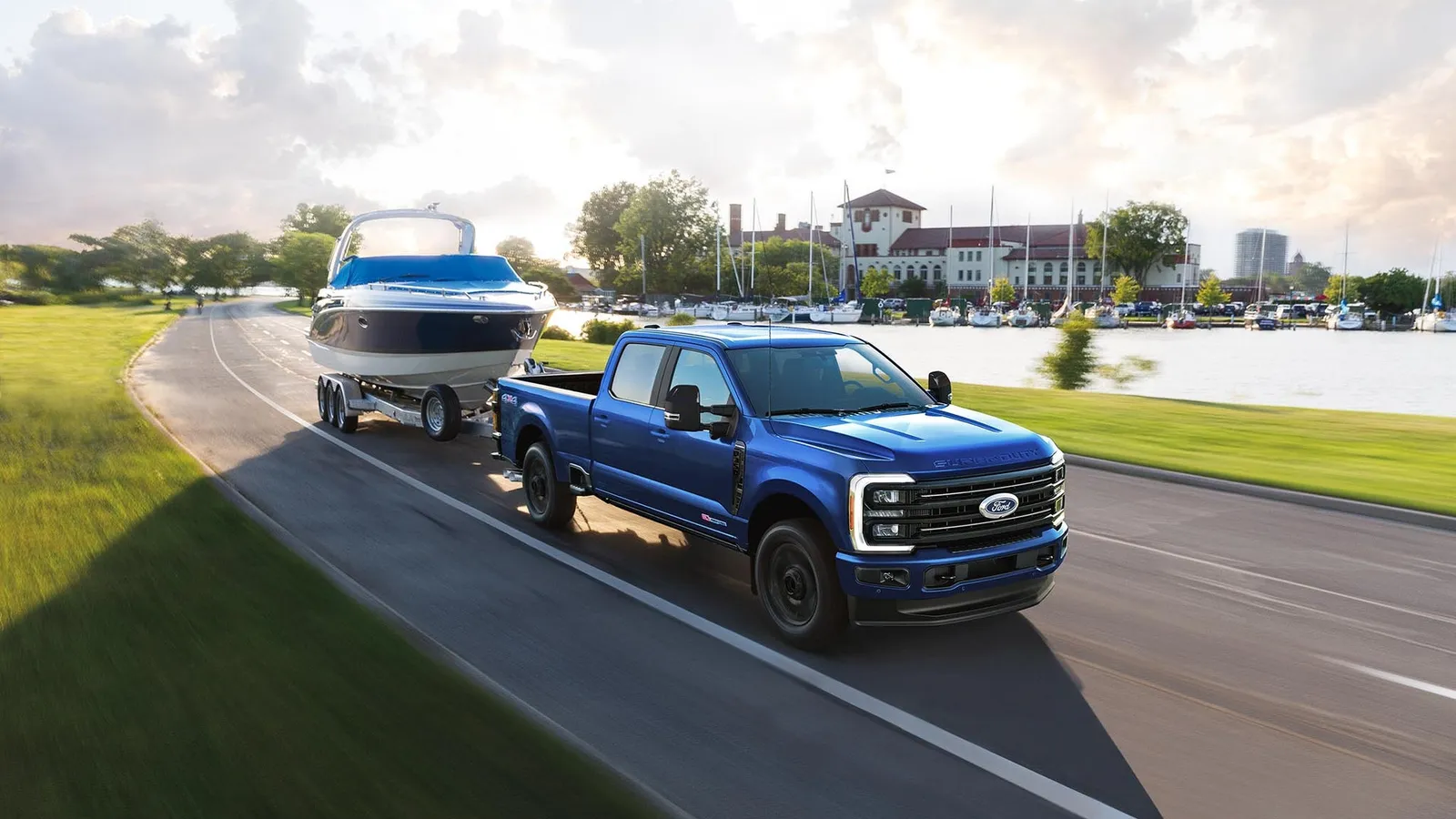
The F-250 is engineered for serious work, with properly equipped models offering very high conventional and gooseneck towing capability. It also delivers impressive available payload, which matters when you load tools, people, a bed full of supplies, and hitch weight all at once.

That last point gets missed often. A truck may be rated to tow a large trailer, but the trailer's tongue or pin weight counts against payload. Add a family, a toolbox, recovery gear, and a fuel tank, and the numbers can tighten quickly. This is why truck buyers should not treat maximum towing as the only figure that matters.

The Ram 2500 is also a capable tow vehicle, and its diesel models are built for confident trailer work. Still, shoppers seeking the highest available numbers for commercial equipment, large fifth-wheel campers, or recurring heavy loads will often find the F-250 has the configuration advantage.

Ford also makes the hitching process less stressful with available trailer-focused features such as onboard trailer tools, camera views, and towing assistance technology. They do not replace a proper walk-around or safe loading practices, but they can make early-morning jobsite departures and crowded campgrounds much easier to manage.

Ride quality and daily driving

This is where the comparison gets more personal. The Ram 2500 has long been known for a more composed ride than many heavy-duty trucks, helped by its rear coil-spring suspension design. For drivers who spend long hours commuting without a trailer attached, that softer character can be appealing.

The F-250 is built with work at the center of the mission. Depending on the configuration, its ride can feel firmer when empty, especially compared with a luxury-focused Ram trim. That is not a flaw. It is part of the truck's heavy-duty foundation and load-carrying focus.

At the same time, an F-250 is far from a bare-bones work rig. Higher trims provide available premium seating, large displays, thoughtful storage, driver-assist features, and a cabin that works for family trips as well as jobsite runs. If you need a truck that does everything, the question is whether you value the Ram's unloaded ride most or the Ford's broad work-focused capability most.

Cab, bed, and trim choices matter more than badges

A crew cab is usually the practical call for families and work crews, while a regular cab can make sense when bed space, maneuverability, and budget are higher priorities. Bed length affects cargo room and fifth-wheel clearance, so it should be decided before getting swept up in trim features.

Ford offers the F-250 in configurations that range from straightforward work trucks to richly equipped pickups. That flexibility is useful because the needs of a landscaper in Kent are different from those of a family towing a travel trailer from Federal Way. The available Tremor package also deserves a look for buyers who spend time on rough forest roads and want added off-road hardware without stepping down from heavy-duty capability.

Ram offers its own wide trim range, including upscale interiors and off-road-oriented options. Buyers considering a Power Wagon should pay close attention to its tow rating and payload, however. It is designed for trail performance and recovery confidence, not for matching the maximum hauling numbers of every other 2500 configuration.

Ownership costs and service should be part of the decision

A diesel heavy-duty truck can be a great tool, but it costs more up front and requires diesel-specific maintenance. Fuel, DEF, filters, and service needs should be part of the budget conversation. If you rarely tow heavy, the savings from choosing a gas engine can stay in your pocket for a long time.

Also think about where the truck will be serviced. Heavy-duty ownership is easier when the people working on it understand towing, commercial use, and the wear that comes with wet weather, gravel roads, and full loads. At Korum Ford, that practical approach carries into the service department.

Which heavy-duty truck is right for you?

Choose the F-250 if your priority is high available towing and payload, multiple engine choices, strong trailer technology, or a truck configured around real work. It is particularly compelling for buyers who want to build the truck around a fifth-wheel, equipment trailer, business needs, or frequent towing schedule.

Choose the Ram 2500 if a smoother empty ride is near the top of your list and its available engines, interior, and towing ratings fit your trailer plan. It can be an excellent truck for the right owner, especially someone who wants heavy-duty strength without giving up a more relaxed daily-drive feel.

The best next step is to bring the real numbers with you: trailer loaded weight, estimated tongue or pin weight, passenger count, bed cargo, and how often you tow. Sit in the cab, test the visibility, and make sure the truck fits the life you live on Monday as well as the trip you have planned for Saturday.

Frequently Asked Questions

Gas or diesel: which F-250 makes more sense around Puyallup?

It depends on how often and how heavy you tow. A gas F-250 costs less up front and suits owners who tow a few weekends a month. The Power Stroke diesel shines with frequent heavy trailers, long grades toward the Cascades and high annual mileage. Compare fuel, DEF and maintenance costs against how you actually use the truck.

Can I get an F-250 set up for a fifth-wheel or gooseneck trailer?

Yes. Ford offers available fifth-wheel and gooseneck prep equipment on Super Duty pickups, and bed length plays a role in fifth-wheel clearance. Bring your trailer's loaded weight and pin weight, and confirm both against the specific truck's payload and towing labels. The Korum Ford team can help match the cab, bed and hitch setup to your trailer.

Do heavy-duty 4x4 trucks need chains on Washington mountain passes?

Sometimes. When WSDOT posts that chains are required, four-wheel and all-wheel-drive vehicles are often exempt, but they must still carry chains, and in severe conditions chains can be required on all vehicles. Rules for vehicles towing trailers can be stricter. Check WSDOT pass reports before you leave and carry chains that fit your tires.

Where can I have a Super Duty serviced near Tacoma?

Korum Ford's service center in Puyallup has certified technicians who work on Ford trucks, including Super Duty models, and you can schedule online. Tell the advisor how you use the truck, such as heavy towing or daily job site work, so maintenance intervals can reflect severe duty. Keeping records of that service also helps resale value later.
Recommended Posts

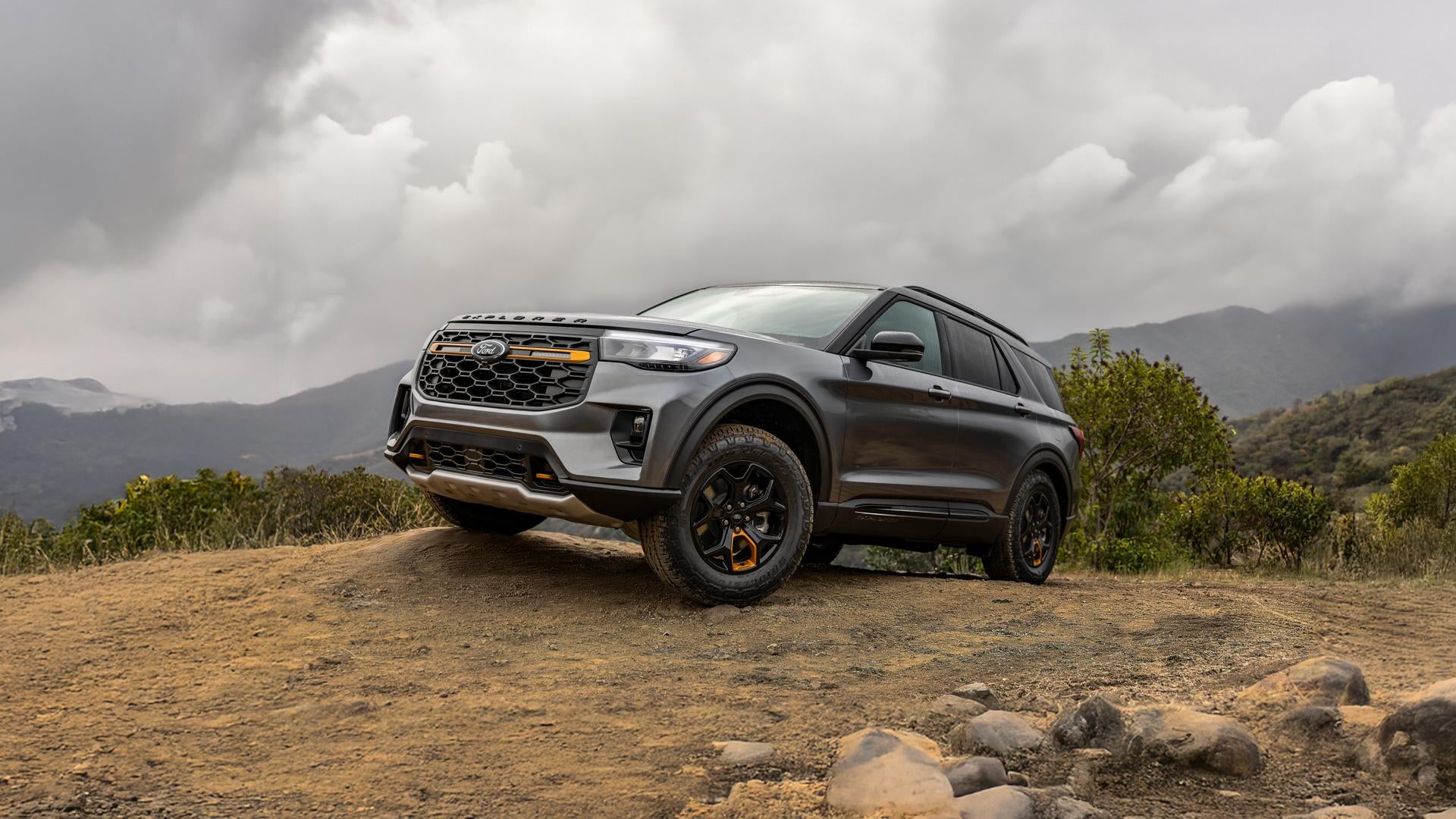
A 2026 Ford Explorer® Timberline® SUV parked on a rocky hillside with mountains behind, exterior view

Choosing a Ford Dealership in Puyallup: Sales, Service and Parts Under One Roof

By Korum Ford Team · Published October 31, 2026 Picking a Ford dealership is a bigger choice than picking where to buy one truck or SUV. The store you choose in Puyallup will likely handle your oil changes, recalls, warranty work and maybe your next trade. So it pays to look past the showroom and ask how the whole place works for owners over time. This guide walks through what to check, what to ask and how to tell if a store fits the way you live and drive in the South Sound. Why the Ford Dealership You Choose Matters After the Sale Most people spend a few hours buying a vehicle and then several years owning it. During those years, the dealership is where you go for scheduled maintenance, warranty repairs, recall work and parts. A store that treats the sale as the finish line can leave you hunting for help later. A good fit shows up in small ways. The salesperson explains features without rushing. The service team calls when they say they will. The parts counter can tell you whether an item is in stock or how long it will take to arrive. Those habits matter more than a flashy lobby. Think about years of ownership, not the next few days Before you visit, picture how you will use the vehicle. Will you tow a boat to Lake Tapps in summer? Commute on Highway 512 every morning? Head over the pass to ski? Each use creates service needs. A store that understands those needs can set up a maintenance plan that matches your miles and your seasons. Ask how the departments talk to each other Sales, finance, service and parts should share information. When they do, your service advisor already knows what you bought, which packages it has and what was discussed at delivery. When they do not, you end up repeating the same story at every counter. A quick question during your first visit, such as who you call if something comes up in the first month, tells you a lot. What to Look For in the Sales Experience Start with how the store helps you choose. You should leave a sales visit knowing more than when you walked in, even if you do not buy that day. A clear walk through of trims and packages Ford builds most models in several trims, and many features are tied to packages. A helpful salesperson will ask how you drive first, then point you to the trims and packages that fit. They should be able to explain the difference between engines, drive systems and cab or seating layouts in plain words. If you are unsure, ask them to show two vehicles side by side on the lot. Real test drives on roads you use A test drive around the block does not tell you much. Ask to drive on a mix of surface streets and highway, and try a hill if you can. Around Puyallup that might mean a loop up South Hill and back down to River Road. Bring the car seat, the golf bag or the dog crate if those go everywhere with you. Check how easy it is to load and unload. Inventory you can browse before you arrive Shopping online first saves time. Look for a store whose website shows real vehicles with photos, trims and features, and that lets you save or ask about a specific unit. You can browse the new Ford inventory at Korum Ford before you come in so the visit starts with the vehicles you already like. How to Judge a Ford Dealership Service Department The service drive is where you will spend the most time as an owner. Walk through it during your sales visit. It only takes a few minutes and tells you a lot about the store. Factory trained technicians and the right tools Ford vehicles have complex electronics, driver assist sensors and software that needs updates. A franchised Ford store has access to Ford diagnostic equipment and factory repair information. That matters for jobs like calibrating cameras after a windshield replacement or updating modules after a repair. Korum Ford says its Ford service technicians have been factory-trained, which is the kind of detail worth asking any store to confirm. Warranty and recall work Warranty repairs and safety recalls on your Ford are handled through Ford dealers. If you buy a used Ford, ask the service team to check the VIN for open recalls before delivery. You can also look up open recalls yourself on the federal recall site run by NHTSA using your 17 character VIN. Once you know a recall is open, look for a store that makes the next step easy. Korum Ford says you can schedule an appointment for your Ford recall on its website. Maintenance that fits how you drive Many Ford models use the Intelligent Oil Life Monitor, which sets oil change timing based on how you use the vehicle, your driving conditions and the time since your last oil service. Ford says the dash shows a change soon message at about 5 percent oil life left. A good service advisor will explain that system and remind you that short trips, towing and stop and go traffic can shorten intervals. Learn more on the Korum Ford service page. Questions to ask the service team How do I book an appointment, and how far out are you usually scheduled? Korum Ford says you can schedule a service appointment online to reduce the amount of time you spend waiting. Do you offer a shuttle, loaners or a waiting area with Wi Fi? Will you text me photos or notes if a technician finds something? Do you service vehicles I did not buy here? Korum Ford says that even if you do not drive a Ford, you can still bring in your car. Who do I call if I have a question after I pick up my vehicle? Parts and Accessories: The Quiet Part of the Store Many owners never visit the parts counter until they need wiper blades or a trailer hitch. Yet the parts department can make ownership easier. Genuine Ford parts are designed for your model, and the counter staff can look up the exact item using your VIN. Korum Ford also says it has new Ford parts for sale in Washington to help with your do it yourself car repairs. Accessories are another reason to know the parts team. Truck owners often add bed liners, tonneau covers, running boards or tow hardware. SUV owners add all weather floor mats, cargo organizers and roof racks. Ask whether accessories can be installed before delivery so your vehicle is ready on day one. Why genuine parts matter for some jobs For basic items, you have plenty of choices. For safety systems, sensors and body parts that affect fit, using parts made for your exact vehicle can save headaches later. Ask the service advisor to explain your options so you can decide with clear facts. Financing and Trade Help Without the Pressure The finance office should make the paperwork clear, not confusing. Before you sign, you should understand the term, what is included and what is optional. Take your time and ask questions about anything you do not recognize. Korum Ford says you can come to its finance team when you want to compare auto loan rates or trade-in values, which is a fair thing to ask any store to do. Getting ready before you visit Check your credit report so there are no surprises. Decide on a comfortable budget for your total cost of ownership, including insurance and fuel. Gather your license, proof of insurance and recent pay stubs. If you have a trade, bring the title or loan information and all keys. You can start the process early on the Korum Ford finance page, which lets you send information ahead of time so your visit moves faster. Trading in your current vehicle A trade in is simple when you come prepared. Clean the vehicle, gather service records and be honest about any issues. The appraiser will look at condition, mileage and history. Ask them to walk you through what they saw so you understand the result. Local Knowledge: Why Puyallup Drivers Benefit From a Nearby Store Distance matters more than people think. When your service visits are a short drive, you are more likely to keep up with maintenance. That protects your warranty, helps resale value and keeps you safer on wet winter roads. Korum Ford sits at 100 River Rd in Puyallup, an easy trip for drivers coming from Sumner, Edgewood or Fife. Being close also helps when you need a quick fix, like a tire pressure warning on a cold morning or a software update before a long trip. Korum Ford also says its Service and Parts Departments offer extended hours, which helps if you cannot get away during a weekday morning. Driving conditions here shape what you need Western Washington brings months of rain, the occasional snow event and plenty of hills. A store that serves local drivers every day knows which tires, wiper blades and battery checks make sense before winter. It can also help you choose between rear wheel drive, all wheel drive and four wheel drive when you buy, based on where you actually go. Community roots Ask how long the store has served the area and how it supports the community. You can read about the dealership's history on the About Korum Ford page. Korum Ford says it has been awarded the President's Award for customer service excellence. A store with long local ties has a reason to keep customers happy for years, not just for one sale. How to Compare Stores Fairly It is normal to look at more than one store. The key is to compare the same things at each one so you are not swayed by a single friendly moment or a single bad one. Use a simple scorecard and fill it in after each visit while the details are fresh. Build a simple scorecard What to rate What a strong answer looks like Product knowledge Clear answers on trims, engines and packages without guessing Test drive A route that matches how you drive, with time to try features Follow up One clear contact who answers calls and emails in a reasonable time Service drive Easy booking, honest timing and updates while your vehicle is in Paperwork Every line explained, with time to read before you sign Read reviews with a careful eye Online reviews help, but read them for patterns rather than single stories. Look for comments about how the store handled a problem, not just how the sale went. A store that fixes mistakes quickly and kindly is worth more than one with only glowing sales reviews. Pay attention to service reviews too, since that is where you will spend most of your time as an owner. Notice how you are treated when you say no One of the clearest signs of a good store is how staff react when you are not ready to buy. A respectful team will give you their contact details, answer a last question and let you go. That same respect usually carries over to the service drive and the parts counter. Ask about hours and convenience Check service hours, Saturday availability and how early you can drop off. If you work in Tacoma or commute north, a store with early drop off and a shuttle can make maintenance much easier. Small conveniences add up across years of ownership and make it more likely you will keep your Ford on schedule. Plan Your Visit to Korum Ford If you are comparing Ford stores around Puyallup, stop by and see how the sales, service and parts teams work together. Browse inventory first, bring your questions and ask for a walk through of the service drive. You can start on the Korum Ford homepage and plan a time that works for you. A Short Checklist to Bring With You Your list of must have features and nice to have features. The roads you want to test drive on. Questions for the service team about scheduling and loaners. Documents for financing and your trade. A note of who you met and how to reach them. Choosing a Ford dealership is about trust over time. Take the same care you would when choosing a doctor or a mechanic. When the store listens, explains and follows through, owning your Ford in Puyallup gets a lot easier. Frequently Asked Questions Can I get my Ford serviced at a dealership where I did not buy it? Yes. Any franchised Ford dealer can perform maintenance, warranty repairs and recall work on your Ford no matter where you bought it. Call ahead or book online so the service team can plan for your visit. How do I know when my Ford needs an oil change? Many Ford models use the Intelligent Oil Life Monitor, which calculates timing from your use, driving conditions and time since your last oil service. Ford says the dash shows a message at about 5 percent oil life left and another when none remains. Your owner's manual lists the maintenance schedule for your model. What should I bring when I visit a Ford dealership to buy? Bring your driver's license, proof of insurance and any financing documents you may need. If you have a trade, bring the title or loan details, all keys and service records. A short list of must have features helps keep the visit focused. How can I check a used Ford for open recalls? You can enter the 17 character VIN on the NHTSA recall lookup to see unrepaired recalls. You can also ask the dealership service team to run a check before you buy. Recall repairs on a Ford are done at a Ford dealer. Sources (as of October 30, 2026) About Korum Ford (as of October 20, 2026) What is the Intelligent Oil-Life Monitor System in my Ford? (as of October 20, 2026) Check for Recalls | NHTSA (as of October 20, 2026) Ford Service Center | Korum Ford (as of October 30, 2026) Ford Finance | Korum Ford (as of October 30, 2026) Although every reasonable effort has been made to ensure the accuracy of the information contained on this site, absolute accuracy cannot be guaranteed. This site, and all information and materials appearing on it, are presented to the user "as is" without warranty of any kind, either express or implied. All vehicles are subject to prior sale. Price does not include applicable tax, title, and license charges. ‡Vehicles shown at different locations are not currently in our inventory (Not in Stock) but can be made available to you at our location within a reasonable date from the time of your request, not to exceed one week.

Ford F-150 Lariat pickup backing a boat trailer down a boat launch ramp

2027 Ford F-150 and the New F-150 Carhartt: What Puyallup Truck Buyers Should Know

By Korum Ford Team · Published October 30, 2026 Ford has announced the 2027 Ford F-150, and the update reaches almost every part of the truck. You get new grilles and wheels on the upper trims, a new standard engine, hands-free highway towing, easier ways into a Tremor or a Raptor, and the first F-150 Carhartt. Ford shared the details in September and says the Carhartt will be available in early 2027. If you drive a pickup in Puyallup, this guide explains what is new, what stays the same and how to compare the 2027 truck with the F-150 you can see today. We stick to what Ford has said, and we point out where the details are still open. What Ford Announced for the 2027 Ford F-150 Ford's announcement groups the 2027 changes into a few clear areas. Here is the short version before we go through each one. Look: XLT, Lariat, King Ranch and Platinum models get newly designed grilles and new wheel designs. Towing technology: BlueCruise with Towing debuts on the 2027 F-150. Engines: a new standard 3.0-liter EcoBoost V6 arrives, and the 5.0-liter V8 returns to the top trims. Off-road: new entry-level Tremor and Raptor choices make those trucks easier to reach. Work style: the new F-150 Carhartt joins the lineup on the 4x4 XLT Crew Cab. Ford points out that F-Series has been America's truck sales leader for 49 years. It credits a steady habit of listening to customers, and it says every update to the latest F-150 trucks was guided by that feedback. The company also says every 2027 F-150 keeps the Built Ford Tough capability customers expect. The grille change is a good example. Ford says customers wanted a modern spin on a familiar face while still having a reliable partner for towing and work. The look changes, and the job of the truck stays the same. It helps to know what Ford has not said. The Carhartt is the one model with timing in the announcement, and that timing is early 2027. The announcement does not give an on-sale date for the other 2027 trims. Treat the rest of the lineup as announced, and use this guide to decide what to ask about as more details arrive. A New Standard Engine and a Returning V8 The biggest powertrain change is the new standard 3.0-liter EcoBoost V6. Ford says it shares its core design with the 2.7-liter EcoBoost V6 it replaces, and that both engines share the same peak capability. The difference shows up in daily driving. Ford says the 3.0-liter reaches peak pulling power and provides roughly 10% to 11% more torque where daily driving occurs. In plain terms, Ford is aiming at the everyday driving you do around Puyallup, Tacoma and Fife, not only at the biggest numbers on a spec sheet. We are not listing horsepower for the V6 engines in this guide. Ask our team for the rating that applies to the exact truck and trim you are considering, and we will walk through it with you. The 5.0-liter V8 is the other headline. Ford says it returns to King Ranch and Platinum for the first time since 2023, which makes it available across the entire F-150 lineup, from XL to Platinum. Ford lists its torque at 410 lb-ft. If you wanted a V8 in a King Ranch or a Platinum, that choice is back. Engine What Ford says 3.0-liter EcoBoost V6 New standard engine that replaces the 2.7-liter EcoBoost V6 5.0-liter V8 410 lb-ft of torque, now offered from XL through Platinum 3.5-liter EcoBoost V6 500 lb-ft of torque, with towing listed at up to 13,500 lbs PowerBoost Hybrid 570 lb-ft of torque, with an available 7.2 kW Pro Power Onboard Ford's towing figure for the 3.5-liter EcoBoost applies to a specific setup. It requires the Tow/Haul Package and the optional Max Tow Axle, and it applies when the truck is properly equipped. Your own truck's rating depends on how it is built, so check the label and ask us before you plan a heavy haul. Choosing an engine comes down to how you use the truck. A few honest questions help more than any spec sheet. How often do you tow, and how heavy is the trailer or boat? Is most of your driving around town, on the freeway or on grades near the mountains? Do you need power for tools on a job site or a campsite? Would you rather have a simple, familiar V8 or the extra pull of a turbocharged engine? Write down your answers and bring them with you. They narrow the choice faster than a long list of numbers. BlueCruise With Towing on the 2027 F-150 BlueCruise with Towing is the new feature Ford leads with. It lets you drive hands-free on pre-qualified divided highways, which Ford calls Blue Zones, while you tow a boat, trailer or camper and keep your eyes on the road. Ford says it is available first on the 2027 F-150, and that Blue Zones cover more than 130,000 miles of highway. Ford also says it wants the feature to reach beyond the top trims. Every BlueCruise-equipped 2027 F-150 has access, from XLT and Tremor to Lariat, King Ranch and Platinum. If you already have an active BlueCruise subscription on the truck, you do not pay extra to use BlueCruise with Towing. The feature needs an active plan or trial. Ford's F-150 page says you can tow up to 10,000 lbs with BlueCruise with Towing when the truck has the Max Tow Axle and the Tow/Haul Package. Ford also lists limits you should read before you rely on it. BlueCruise is a driver-assist feature and does not replace safe driving. A fully alert, attentive driver is always required. The feature is limited by trailer type, size and weight, and not every BlueCruise function works while towing. You must verify that the trailer is attached, loaded and set up correctly. Ford says it tested the system on U.S. roads and in its Dynamic Driving Simulator to cover as many trailer combinations and conditions as possible. Blue Zones are specific highway sections, not every road. Before you count on the feature for a boat run or a trip over the pass, check Ford's BlueCruise information to see whether the highways you drive are included. We can help you look it up when you visit. New Entry-Level Tremor and Raptor Choices Ford says the new entry-level Tremor and Raptor choices make its off-road trucks more accessible, with the same tough hardware and capability. The trade is simple. You keep the off-road equipment and give up some comfort and convenience features. Here is how Ford describes each one. The entry-level Tremor Ford says this Tremor is based on the STX and puts work and recreation-ready off-road capability first. It uses an STX steering wheel and manual air conditioning instead of dual-zone climate control. It drops the heated front seats, replaces the B&O audio setup with a simpler system, deletes the off-road running boards and uses fixed rear glass in place of the power sliding rear window. The entry-level Raptor Ford says this Raptor puts high-performance off-road capability ahead of creature comforts. It removes the head-up display, the fog lamps, the Mobile Office package, the power passenger seat and the under-seat storage. It also swaps the power-adjustable steering column for a manual tilt column and steps down from the B&O audio system. The high-performance off-road hardware that defines the Raptor stays. These lists matter because they change what you get in the cab. Ford has not said which of these versions will reach our store or when, so ask our team before you build your plans around a specific one. If your weekends mean forest roads and trailheads, test drive a Tremor or a Raptor today and decide which comforts you would miss. The First F-150 Carhartt Ford says the first-ever F-150 Carhartt is available on 4x4 XLT Crew Cab models. It expands the Ford and Carhartt partnership beyond the Super Duty, and it is built for people who want durability and work-smart style. Ford lists these details. Outside the truck Unique 20-inch wheels. Distinctive fender vents and badging finished with the Carhartt logo. A lower rocker and tailgate graphic. Signature headlamps and a cowl hood. A modified grille, dual exhaust and off-road running boards. A spray-in bedliner branded with Carhartt. Inside the cab Two-toned Carhartt themed seat covers. Updated door trim panels, console lid and steering wheel with accent stitching. All-weather floor mats with the Carhartt logo. Ford says the F-150 Carhartt will be available in early 2027. That timing is Ford's, and it covers the model, not any single store. Contact us to hear when it arrives. If you work out of your truck, the bedliner and the all-weather mats are the details to picture in daily use. The truck also reflects a wider relationship. Ford says it and Carhartt have joined in a multi-year strategic relationship to support the communities where their customers live and work. For a buyer, the practical meaning is a factory-built truck with Carhartt styling and work-ready details, not an aftermarket add-on. How the 2027 F-150 Fits South Sound Driving A long feature list is easier to use when you match it to your week. This table pairs common South Sound driving habits with the 2027 change most likely to matter. If this sounds like you Look at first You commute around Puyallup and want easy everyday pull The new standard 3.0-liter EcoBoost V6 You tow a boat or camper on divided highways BlueCruise with Towing, plus the engine that fits your load You work out of the truck near Sumner or Bonney Lake The F-150 Carhartt, with its branded bedliner and all-weather mats Your weekends go to trailheads The entry-level Tremor or Raptor, and the features each one drops You want a V8 in a top trim King Ranch or Platinum with the 5.0-liter V8 None of this replaces a drive. The most useful step today is to drive the current F-150 and learn which cab, bed, engine and trim fit you. Then the 2027 changes become a clear list of what is different, not a pile of new names. You can look through our new Ford inventory to see what we list online, and you can ask about pre-owned trucks if you want to compare a used F-150 side by side. Questions to bring on a test drive Does the cab and bed size fit your garage, your driveway and your regular loads? How does the engine feel pulling away from a stop and merging onto the freeway? Which comfort features do you use every day, and would you miss them on a lower trim? If you tow, which setup and hitch equipment would your trailer need? See the F-150 Lineup at Korum Ford in Puyallup Stop in at Korum Ford, test drive the F-150 you can drive today and tell us which 2027 changes matter to you. Ask to hear from us as Ford shares more details, and bring your towing, hauling and trail questions with you. Our team can sort through cab, bed, engine and trim, and you can start by browsing the new F-150 trucks we list online. Keeping Today's F-150 Ready While You Decide A new model year does not mean you have to replace a good truck. If you drive an F-150 now, regular maintenance keeps it dependable for the work you do. Our service department can look after your truck while you watch the 2027 news. If you are thinking about a trade-in or a used truck while you wait, talk to our team, and you can read about financing on our finance page when you are ready to plan. Frequently Asked Questions What is new on the 2027 Ford F-150? Ford lists new grilles and wheel designs on XLT, Lariat, King Ranch and Platinum, and a new standard 3.0-liter EcoBoost V6. It also lists the V8 back on King Ranch and Platinum, BlueCruise with Towing, entry-level Tremor and Raptor choices and the new F-150 Carhartt. Ask our team which of these apply to the trim you want. Which F-150 gets the Carhartt package? Ford says the first-ever F-150 Carhartt is available on 4x4 XLT Crew Cab models. It adds Carhartt themed styling, a branded spray-in bedliner, two-tone seat covers and all-weather floor mats. Ford says it will be available in early 2027. Can the 2027 F-150 tow hands-free? Ford says BlueCruise with Towing lets you drive hands-free on pre-qualified divided highways while you tow, and it is available first on the 2027 F-150. It needs an active plan or trial. It is limited by trailer type, size and weight, and a fully alert driver is always required. When will the 2027 F-150 arrive at Korum Ford? Ford has said the F-150 Carhartt will be available in early 2027. The announcement does not give an on-sale date for the other 2027 trims. Contact us and we will tell you what we learn about timing for our store. Is the V8 offered on every F-150 trim? Ford says the 5.0-liter V8 returns to King Ranch and Platinum, which makes it available across the entire lineup from XL to Platinum. Ask our team to confirm the engine choices for the exact trim and cab you want. Sources (as of October 30, 2026) Everything You Need to Know: 2027 Ford F-150 and New F-150 Carhartt (as of October 30, 2026) 2027 Ford F-150 Truck (as of October 30, 2026) Although every reasonable effort has been made to ensure the accuracy of the information contained on this site, absolute accuracy cannot be guaranteed. This site, and all information and materials appearing on it, are presented to the user "as is" without warranty of any kind, either express or implied. All vehicles are subject to prior sale. Price does not include applicable tax, title, and license charges. ‡Vehicles shown at different locations are not currently in our inventory (Not in Stock) but can be made available to you at our location within a reasonable date from the time of your request, not to exceed one week.

F-150 Versus Silverado Comparison for Truck Buyers

F-150 Versus Silverado Comparison for Truck Buyers

A truck has to earn its spot in a South Puget Sound driveway. Maybe it is hauling materials through Puyallup, pulling a camper toward the Cascades, getting wet gear home from the coast, or handling a packed family weekend. This F-150 versus Silverado comparison focuses on what matters when the truck will be used, not just admired from a parking lot. Both the Ford F-150 and Chevrolet Silverado 1500 are proven full-size pickups with major capability, broad trim lineups, and loyal owners. The better choice depends on the work you do, the trailer you pull, the roads you travel, and how you want the truck to feel every day. F-150 Versus Silverado Comparison: The Big Difference The Ford F-150 is built around choice. Its engine lineup ranges from efficient turbocharged options to a V8 and the PowerBoost hybrid. That variety lets shoppers match the truck to a specific job instead of paying for power they will not use. The F-150 also uses an aluminum-alloy body, a design Ford has refined for years to reduce body weight while maintaining the strength truck owners expect. The Silverado takes a more traditional route, with a steel body and a strong emphasis on familiar truck power. Its lineup has included turbocharged four-cylinder, V8 gas, and Duramax diesel options, depending on model year and trim. For buyers who want a straightforward V8 pickup or are drawn to diesel torque and efficiency, the Silverado makes a compelling case. Neither approach is automatically better. An F-150 buyer may value flexibility and available technology, while a Silverado buyer may prefer the feel and sound of a conventional V8 or the long-haul character of a diesel. Start with the jobs on your calendar, not the badge on the grille. Engines, Power, and Everyday Driving Ford gives F-150 shoppers an unusually wide range of powertrains. The 2.7L EcoBoost, the starting engine in the current lineup, is a smart fit for drivers who want responsive power without moving up to the largest engine. The 3.5L EcoBoost is a popular choice for serious towing and hauling, while the available 5.0L V8 appeals to drivers who want naturally aspirated V8 power. The PowerBoost hybrid brings useful low-end torque and can provide available onboard power at a jobsite or campsite. That available Pro Power Onboard system is a real-world advantage for some owners. It can run tools, charge equipment, or support a tailgate setup without hauling a separate generator. It will not matter to every buyer, but for contractors, campers, and tailgaters, it can turn the truck into part of the plan. The Silverado counters with its own broad power choices. Its turbocharged four-cylinder is aimed at efficient daily use, while the available V8 engines serve buyers who want traditional full-size-truck performance. The Duramax diesel deserves a close look for frequent trailer towing and long highway miles. Diesel ownership also brings different maintenance considerations, fuel availability, and higher up-front costs, so it is best for drivers who will actually use its strengths. Around Tacoma traffic, wet roads, and mountain grades, both trucks have the power to feel confident. Test-drive the engine you are considering, especially if you are moving from an older truck. Turbocharged torque and modern transmissions can make a smaller-displacement engine feel far stronger than expected. Towing and Payload: Match the Truck to the Trailer Maximum tow ratings get attention, but the right number is the one that fits your actual setup. Proper towing depends on the cab, bed length, engine, axle ratio, drivetrain, payload package, hitch equipment, and trailer configuration. A truck advertised with a maximum rating may not match the vehicle sitting on the lot. Properly equipped F-150 models can offer exceptional towing and payload capability. Ford also provides available features designed to reduce the guesswork, including trailer backup assistance, integrated trailer brake controls, and camera views that can make hitching and maneuvering less stressful. For a boat at Lake Tapps, a utility trailer for work, or a travel trailer headed east, those details can matter as much as peak horsepower. The Silverado is also a capable tow rig, with available trailering technology, camera systems, and configurations built for heavy work. Its diesel option can be particularly attractive for owners who tow regularly over longer distances. Still, check the payload sticker on the exact truck. Tongue weight, passengers, gear, and accessories all count against payload, and this is where many buyers discover that a big tow rating tells only part of the story. If you tow occasionally, a well-equipped half-ton can be a comfortable, versatile answer. If you tow a heavy fifth-wheel every weekend or carry commercial loads day after day, it may be worth discussing whether a Super Duty-class truck is a better long-term fit. Cab Comfort, Storage, and Workday Usability The F-150 and Silverado both offer regular, extended, and crew-cab-style configurations depending on availability, and both can serve as family transportation. Crew-cab models provide useful rear-seat space for adults, child seats, work crews, and the inevitable pile of bags that comes with a weekend away. The F-150 stands out with thoughtful work-focused features. Available interior work surfaces can create a usable place for a laptop between appointments. Storage solutions, fold-flat seating options, and available tailgate features make the cabin and bed easier to use without turning the truck into a rolling office you never asked for. The Silverado offers a comfortable cabin in the right trim and has a strong practical feature of its own: the available Multi-Flex tailgate. Its multiple configurations can help when loading long items, creating a step, or keeping smaller cargo from sliding out. It is a useful system for homeowners and jobsite users alike. On either truck, trim level changes the experience dramatically. A work-focused model and a luxury-oriented trim may share a nameplate but feel like entirely different vehicles. Sit in the rear seat, open the storage compartments, and load something you would normally carry. That hands-on check reveals more than a spec sheet. Technology and Safety for Northwest Roads Modern full-size trucks can be remarkably easy to live with, especially when equipped with blind-spot monitoring, rear cross-traffic alert, adaptive cruise control, and parking cameras. These features are not substitutes for attentive driving, but they can reduce stress in crowded parking lots, on rainy commutes, and when towing. Ford's available BlueCruise hands-free highway driving technology is a notable differentiator for eligible F-150 models and compatible roads. It is designed to assist with controlled-access highway travel, not replace the driver. For people with frequent freeway commutes between Kent, Federal Way, Seattle, and Puyallup, that added convenience may be worth considering. Silverado buyers should also compare the available driver-assistance packages carefully. Chevrolet offers useful trailering camera technology and advanced safety features, but availability can vary by trim and package. Before deciding, make a short must-have list. If a 360-degree camera, heated steering wheel, trailer monitoring, or adaptive cruise control matters to you, confirm it on the specific truck rather than assuming it is standard. Off-Road Capability and Bad-Weather Confidence For forest roads, snow trips, and rougher worksites, both brands offer dedicated off-road trims. Ford's F-150 Tremor and Raptor bring distinct personalities. Tremor is aimed at buyers who want serious off-pavement ability while retaining everyday truck usefulness. Raptor is the high-performance choice, built for drivers who want advanced suspension and a much more aggressive off-road experience. Silverado Trail Boss and ZR2 models provide Chevrolet alternatives with lifted stances, off-road hardware, and tougher styling. The ZR2 is especially worth comparing with higher-end off-road F-150 models if trail performance is central to your purchase. For most Washington drivers, four-wheel drive, capable tires, good ground clearance, and sensible driving habits will do more than an extreme off-road package. A less specialized trim may leave more room in the budget for the accessories or trailer equipment you will use every week. Which Truck Is the Better Buy? Choose the F-150 if you want the widest engine selection, available hybrid power, strong towing and payload potential, and practical features that support work and recreation. It is especially appealing for shoppers who want their truck configured around a specific task, whether that means commuting efficiently, powering tools, towing a trailer, or taking the family out of town. Choose the Silverado if a traditional V8 experience, available diesel power, or the Multi-Flex tailgate is high on your list. It remains a capable, comfortable full-size truck with plenty to offer drivers who know exactly what powertrain and setup they prefer. The best move is to bring your real questions to the lot: What does your trailer weigh when loaded? How many people ride with you? Do you need a short bed for parking or a longer bed for materials? At Korum Ford, a truck-focused team can help you compare F-150 cab, bed, engine, and package options without turning the decision into a high-pressure sales pitch. A pickup should make the next job, trip, or rainy Monday easier. Take the time to sit in the truck, check its payload label, and drive the configuration that matches your life. The right answer is the one that is ready when you put it to work. Frequently Asked Questions Which half-ton truck is better for towing a camper over Washington passes? Either can do it when properly equipped, so the trailer decides. Check the exact truck's door jamb payload and tow rating, then add tongue weight, passengers and gear. On Snoqualmie or White Pass, engine braking, trailer brakes and cooling matter on long grades. Check WSDOT pass reports before you leave and carry chains in winter. Does the F-150 PowerBoost hybrid need different maintenance? Routine care looks much like any F-150: oil changes guided by the oil life monitor, tire rotations, brake and fluid checks. The hybrid system has its own battery and cooling components that technicians inspect during scheduled service. Follow the maintenance schedule in your owner's manual and the Ford app, and have the truck serviced by technicians trained on Ford hybrids. Is BlueCruise available on every F-150? No. BlueCruise hands-free highway driving is available on select F-150 trims and works only on prequalified divided highways. The driver must keep eyes on the road and be ready to take over at any time. Ask Korum Ford which trucks in stock are equipped and how the feature works on Interstate 5 commutes through Pierce and King counties. Can I compare several F-150 configurations in one visit to Korum Ford? Usually, yes. Korum Ford typically stocks a range of F-150 cabs, beds, engines and trims, so you can often sit in a SuperCrew and a SuperCab, compare bed lengths and drive different engines in one trip to Puyallup. Bring your trailer weight and the gear you haul, and the team can narrow the choices to the trucks that fit.